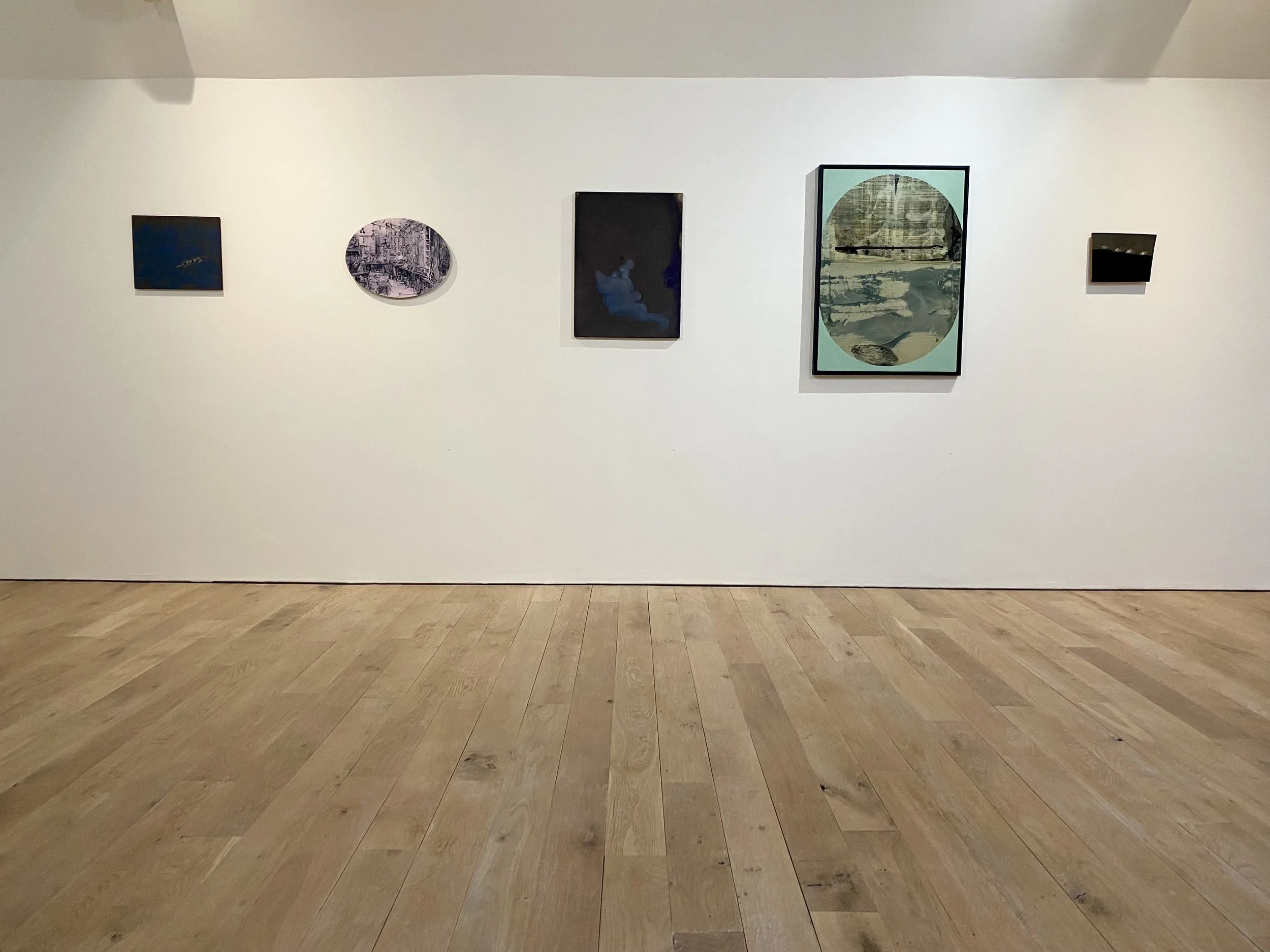
winter haiku
Japan has a highly refined system of aesthetics, and exhaustively categorises its intellectual and creative approaches, as in the philosophies of wabi and sabi, and the practices of, for example, ikebana (flower arranging), or kintsugi (repairing with gold), and notably, in poetic expression, the haiku. Haiku originated as an introductory paragraph (hokku) used within the renga genre of collaborative poetry, but gradually evolved into a stand-alone poem with a 5-7-5 syllabic pattern, incorporating a seasonal or nature reference, and a kireji, or ‘cutting word’.
This exhibition is not simply a homage to Japan, as haiku is now used worldwide, often shedding its formal prescriptions when written in other languages, although it continues to be used as a vehicle for concise observation or sudden revelation - two qualities that translate readily into the visual and painterly realm. Individual works and participating artists were therefore selected with such qualities in mind, to gather together contemplative images of intimate scale, deft touch, and at times with a specific structure or key gesture.
Iain Andrews
Sarah Casey
Christopher Cook
Graham Crowley
Caroline Gorick
Anthony Cross
Susie David
Frances Gynn
Hiroshige II
Jason Martin
Connor McIntyre
Karen Roulstone
Rebecca Sitar
Dillwyn Smith
Steve Thorpe
Richard Kenton Webb
Barei Yasuda
Winter 2025/26

The Haiku - is a poem whose subject matter is traditionally of the natural world: be it creatures, plants, mountains, ponds, weather, seasons, or of course - love.
Japanese poetry rarely uses rhyme, and within minimal words of merely a 5-7-5 syllable pattern on three lines, the skill lies in the word play, evoking imagery or emotion to wake the senses to a moment of illumination or surprise, and, crucially, a kireji, or keyword, on which the intention of the poem hangs.
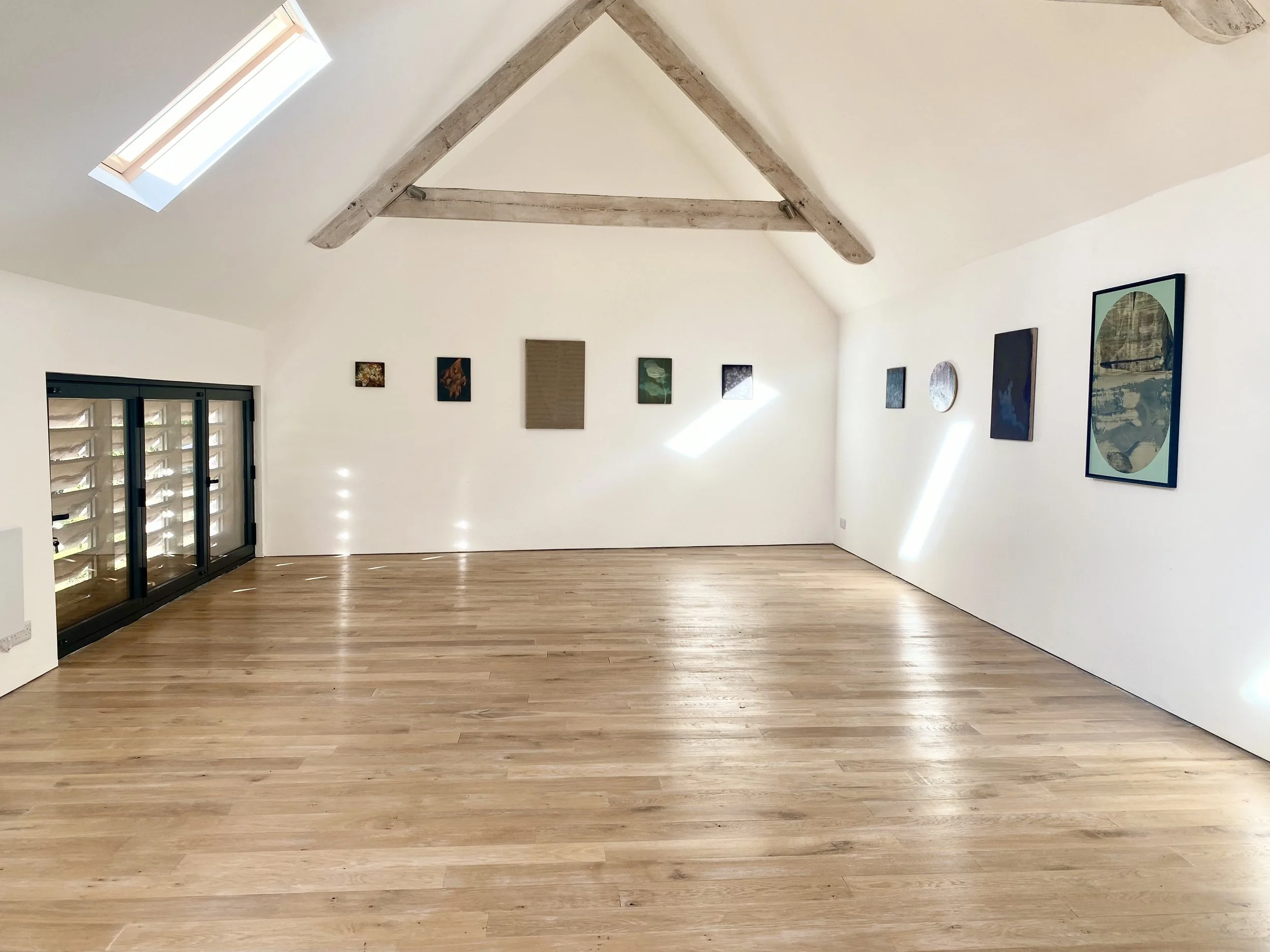
In reference to the traditional form of Haiku, we have honoured the 5-7-5 syllables by hanging the works as if each is a syllable, and the walls sentences, with the kireji in the form of the print ‘River Crow. Willow’ by Kono, and the glacial flour looking glass ‘What My Eyes Saw Yesterday’ by Sarah Casey.
The famous haiku poet and Zen Buddhist is Basho (1644-1694), whose most recited poem follows - here translated by me while ignoring the syllable rule:
Old pond
Frog jumps in
Water sound
Basho is renowned for imbuing haiku with Zen principles, including mindfulness, living in the present moment, and being in harmony with nature - all of which, as we are startlingly aware - is relevant for us in our lives today.
Susie David
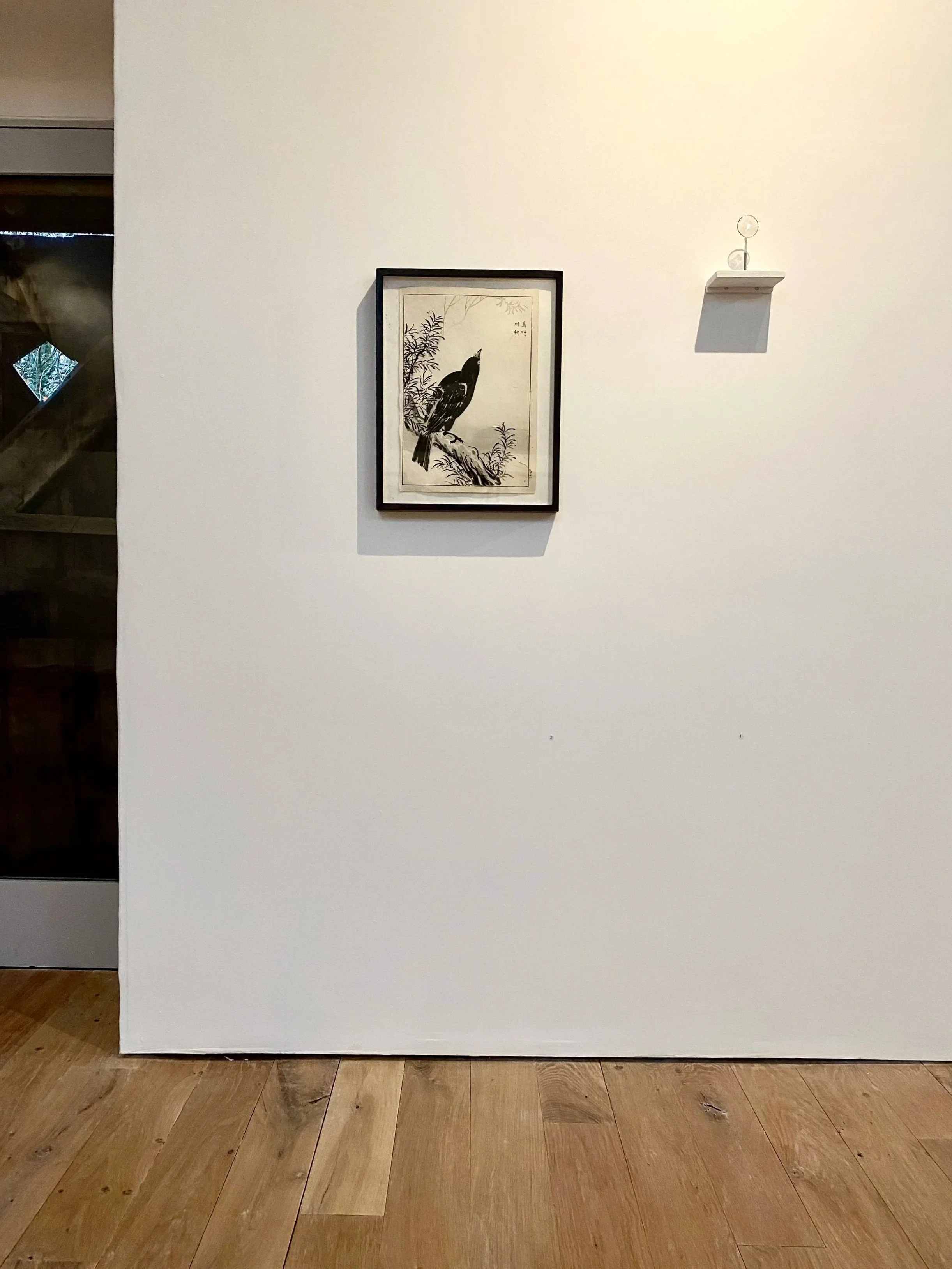
‘River Crow. Willow’
c1883
Barei Yasuda, Aka Kono, (1844 –95) was born in Kyoto, Japan, and became a ukiyo-e painter, book illustrator, and teacher, famous for woodblock prints, especially the Kacho-ga (images of birds and flowers).
‘What My Eyes Saw Yesterday’
Glacial flour on glass lens 2025
Sarah Casey typically develops drawings “contingent on time and environmental conditions”. In 2020 she began working with glacial archaeologists, exploring human and mineral entanglements emerging from glacial melt.
‘Hawthorn'
(St Huberts Chapel)
Acrylic and oil on linen on wood panel 2025
Rebecca Sitar developed an interest in haiku poetry over 25 years ago, often following its thematic guidelines: “My work leans towards an apparent simplicity; pictorial forms are pared down, often suspended in space inviting contemplative encounters”.
‘Light Industry'
Oil on panel 2025
Graham Crowley won the John Moores Painting Prize in 2023 with his painting Light Industry, a small version of which is included here, depicting a motorcycle dealership, of which he says: "What I found enthralling about the place was the diffused, dusty kind of light that emanated from a grubby, obscured skylight”.
‘Pathway from Dream to Consciousness’
Oil on linen 2018
Christopher Cook has worked predominantly in graphite for two decades, but here shows a rare colour work. He views painting as “a discourse between inner and outer worlds best conducted in a state of uncertainty”.
‘The Night We Called It A Day’
Oil and emulsion on wood panel 2025
Connor McIntyre’s work is eclectic and experimental, saying for him “the resulting palimpsest speaks of data flows, mobility, flux, multiplicities, encoding, and the rhizomatic character of our current predicaments.”
‘Kimmeridge’ Coal on panel
Steve Thorpe gathers samples of rock from areas he has climbed, which he then grinds to a pigment in order to create works as homage to the solitary experience of specific landscapes.
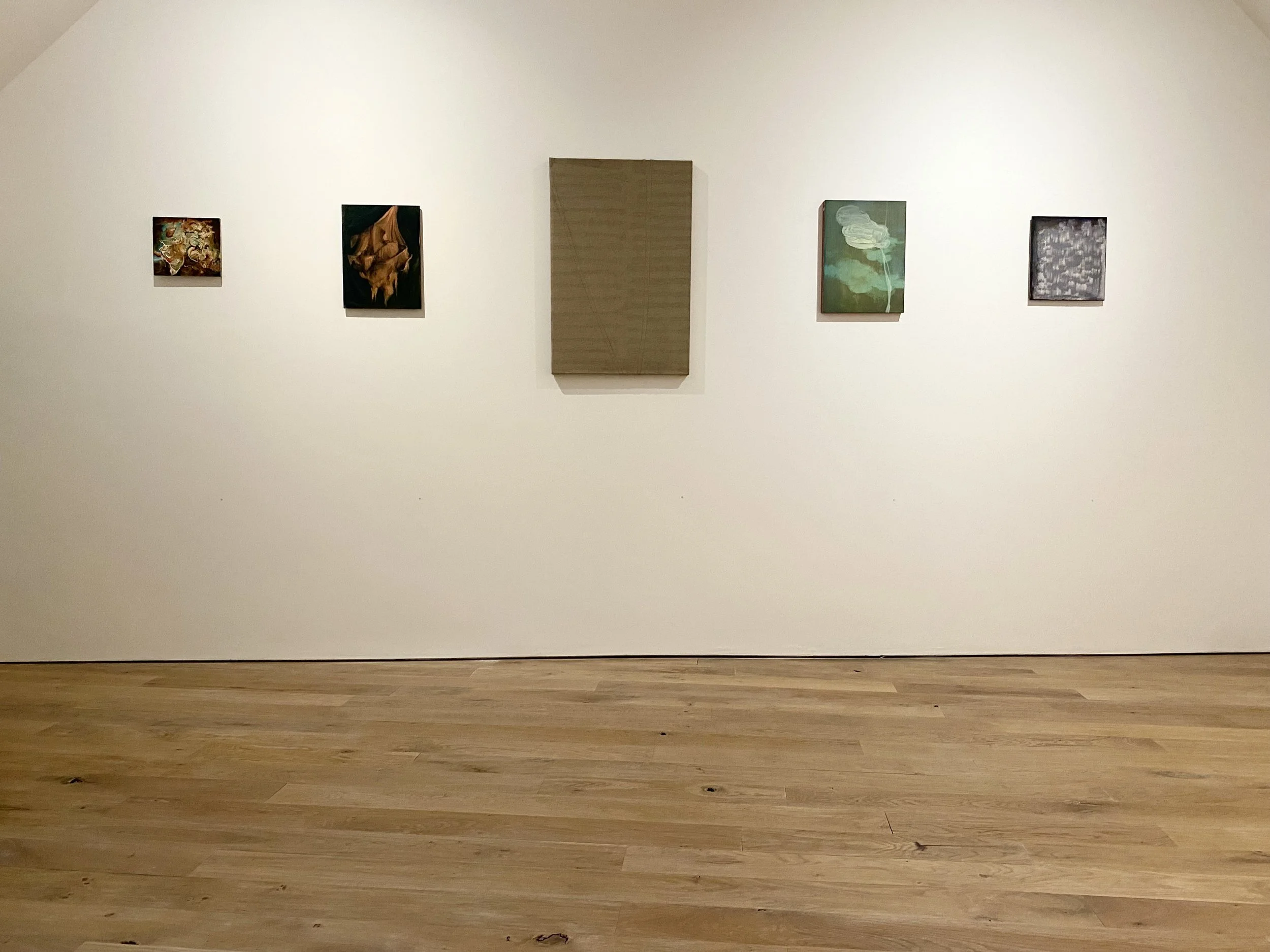
‘Gehenna’
Oil on board
Iain Andrews says his painting “often use images from art history as starting point from which to playfully but reverently deviate.”
‘Vespa’
Oil on board 2025
Caroline Gorick uses fluid brushwork to “explore light, stillness, and the fragile presence of everyday objects”, resulting in luminous images in which forms hover between presence and absence.
‘‘Potency Painting’
Potentised (homeopathic) pigment on Belgian linen
Dillwyn Smith has dedicated himself to experimentation with colour and its metaphysical values, from the use of essences of pigments sprayed and saturated into fabric or canvas, to composite stitching.
‘Untitled
Oil on canvas c2017
Karen Roulstone (1967–2019) Her work is concerned with light, temporality and the illumination of ideas through a decisive moment that is transient, yet full of significance.
‘‘Unfurl the Waves’
Oil on panel 2025
Susie David says of her fluid, improvised paintings: “my work begins with water - often the sea. Elemental communion nurtures a water mindset within - making me an agent for this precious wilderness“.
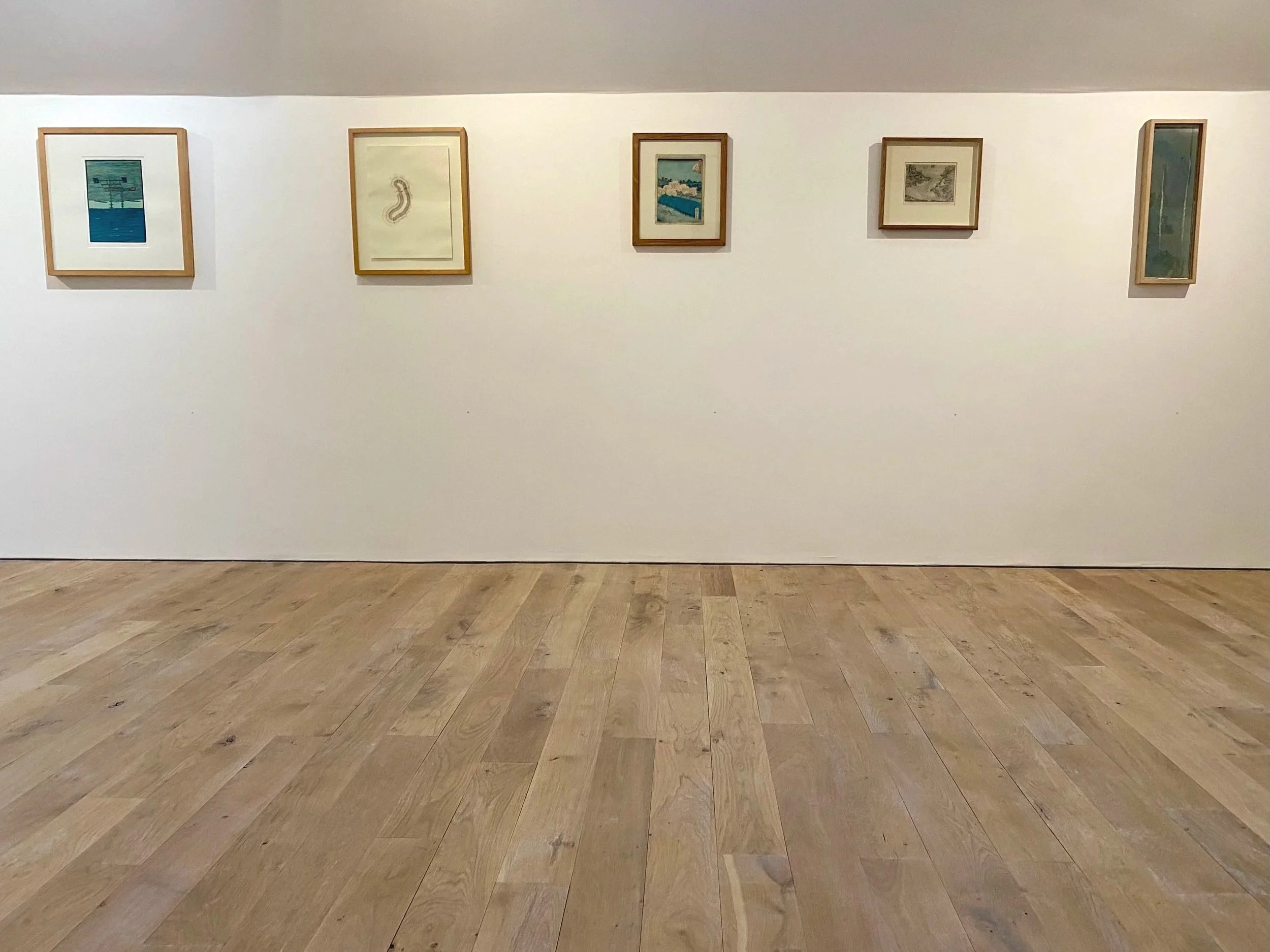
‘Iceland No.4’ (Thoughts in Search of a Thinker)
Wood block print ed. 7/15 2013
Richard Kenton Webb declares: “when you paint, new associations occur. If you are awake, unexpected things will happen. But this will only happen if you allow it. This is how the magic happens.”
‘Untitled’
Ink on paper 2006
Jason Martin allows materials and chance guide his process, creating sculptural paintings where time leaves a trace, and where “there is a warmth of figuration that I try to effect into the gestures I make.”
‘Sumida River’
:48 Famous Views of Edo c1860
Hiroshige II (1826-1869) was a Japanese woodblock artist of ‘The Floating World' or ukiyo-e art. He inherited the name following the death in 1858 of his master, the legendary Hiroshige, whose daughter he married. Hiroshige took on few students, and Hiroshige II became the most successful.
‘Le Glacier’
Etching 2/90 1947
Anthony Gross (1905 - 1984) studied at the Slade under Henry Tonk. In Paris he became a member of the La Jeune Gravure Contemporaine, designing costumes and sets for ballet productions. In Britain in 1934 he worked on animated films, before being appointed to accompany the D Day landings.
‘‘‘Still’
Oil + graphite on paper 2023
Frances Gynn’s practice reflects a growing concern for the human effect on the environment, specifically endangered species, and asks “what does it mean to be connected with nature?”
Gretchen Faust
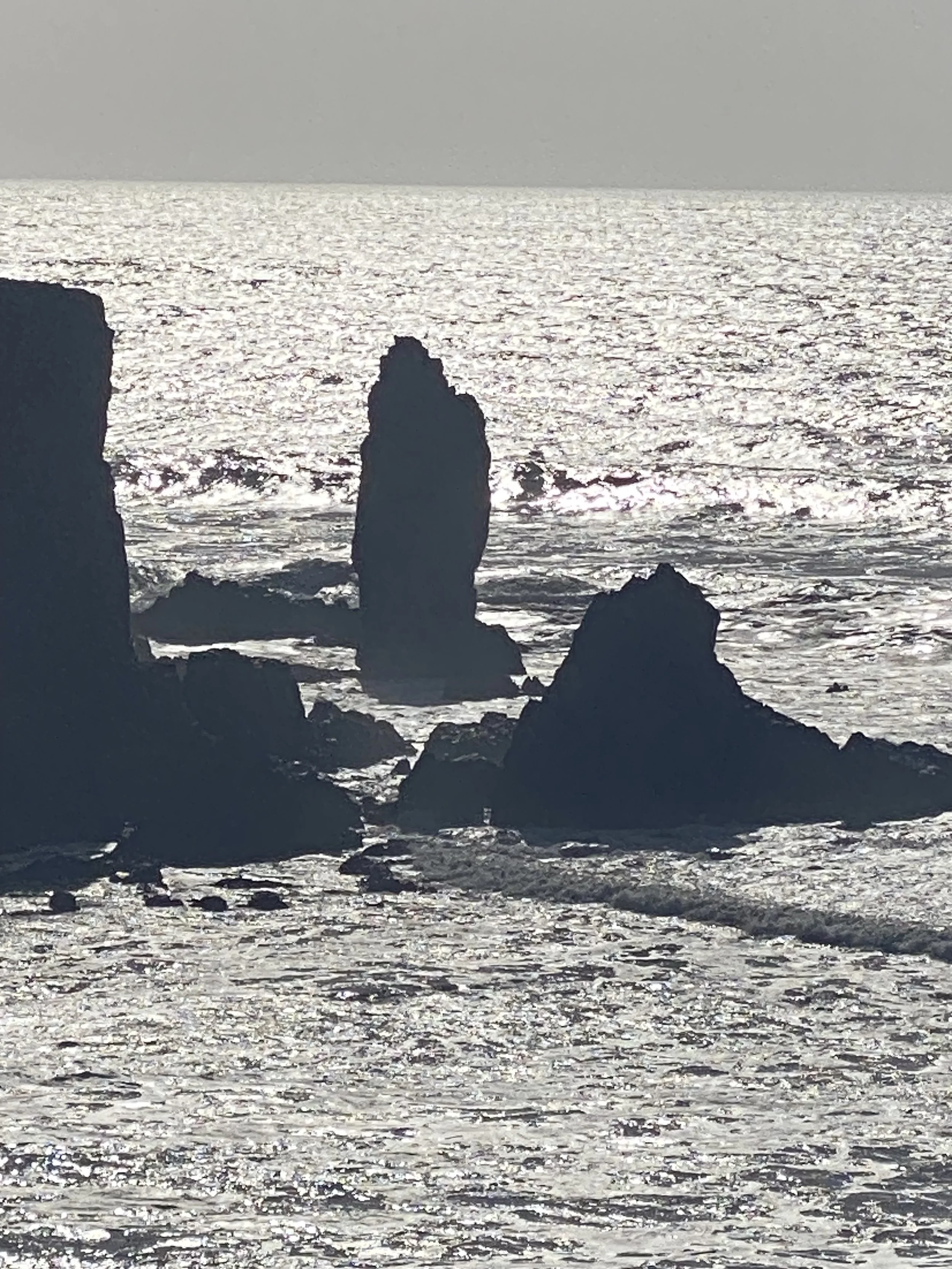
The nearby Winter coastline mimicking a Japanese Zen garden.
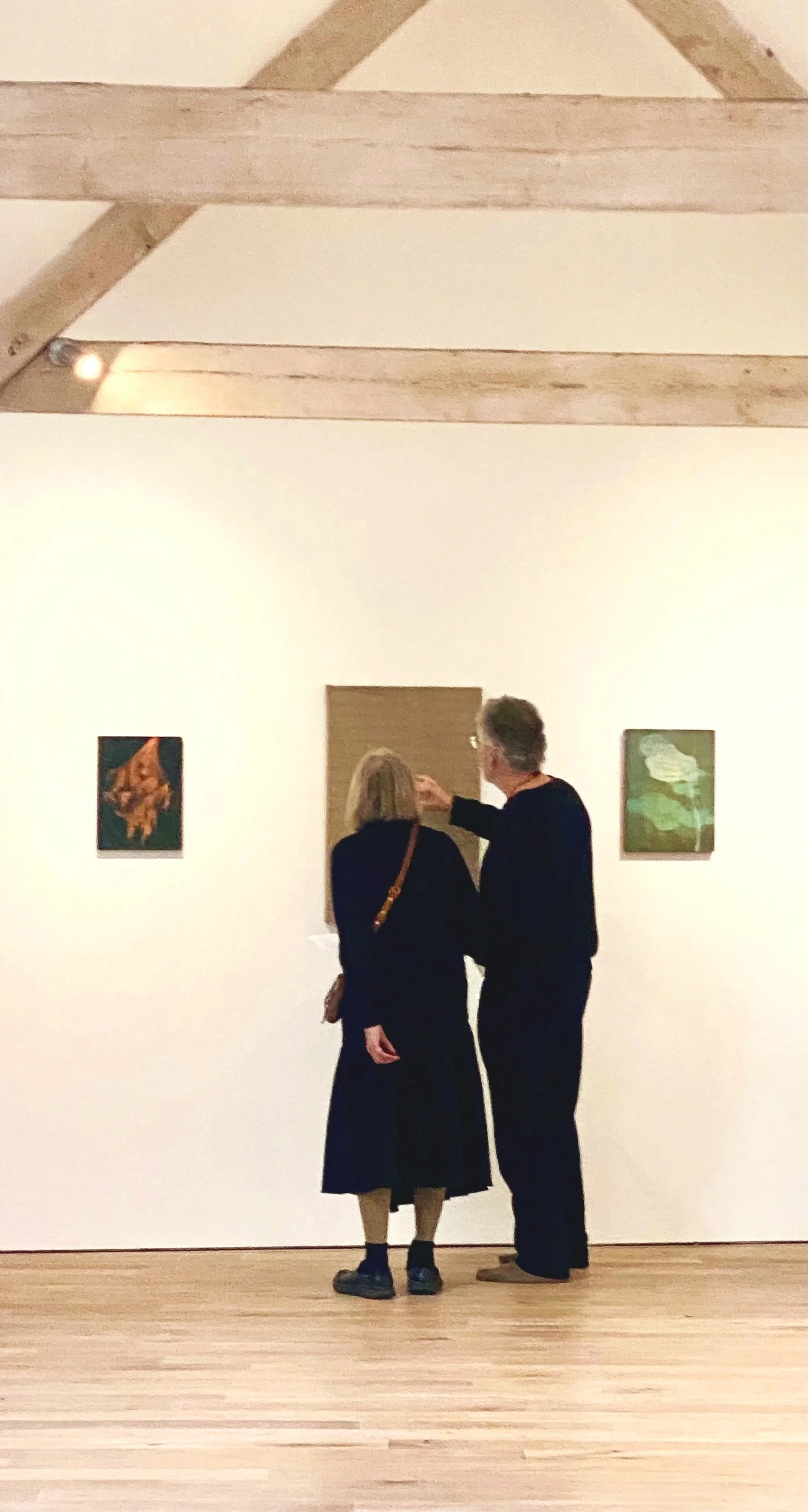
art lovers

coming soon - the guided tour